Claim integrity for pharmacy

RxAI | AI Pharmacy Claim Validation Platform | Grelin Health

Validate pharmacy claims against payer rules, formularies, prior authorization, REMS, and clinical documentation before claims are submitted.
RxAI pharmacy claim validation dashboard — checking eligibility, coverage rules, and documentation before the claim moves
The Structural Reality

Most pharmacy denials are created long before billing ever sees the claim.

01

Patient Access Origin

They start at patient access. In documentation. In payer specific logic that no one validates until the rejection comes back.

02

Revenue at Extreme Risk

By then the patient has left the pharmacy. The revenue is at risk. Someone on the team is rebilling or refiling or writing it off.

03

Not a Billing Failure

The denial was not a billing failure. The conditions that caused it existed before the claim was ever created.

Platform Blueprint

A decisioning layer that sits ahead of the claim.

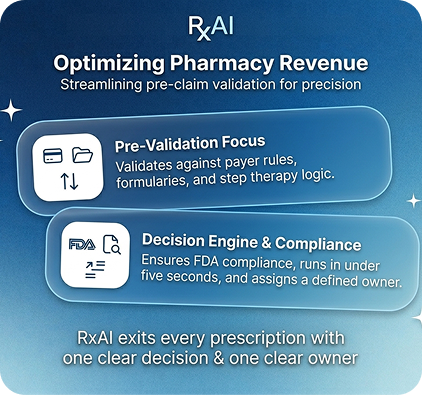
RxAI validates every prescription against payer rules, formularies, prior authorization requirements, step therapy logic, and FDA indication data.

The system runs in under five seconds and exits every prescription with one clear decision and one clear owner. No prescription leaves the queue without a routing.

Under 5s
Decision time per prescription
7
Decisioning pillars per claim
7
Executable outcomes

Integration Standard

100% CLIENT-SIDE FREE

Runs server-side directly at the API gateway under TLS 1.3.

REAL-TIME PAYER MAPPINGS

Synchronizes commercial group rules every Sunday at midnight.

CLINICIAN OWNERSHIP ASSIGNS

Routes administrative tasks instantly inside existing EHR software.

Decisioning Engine

Seven Pillars of Claim Integrity

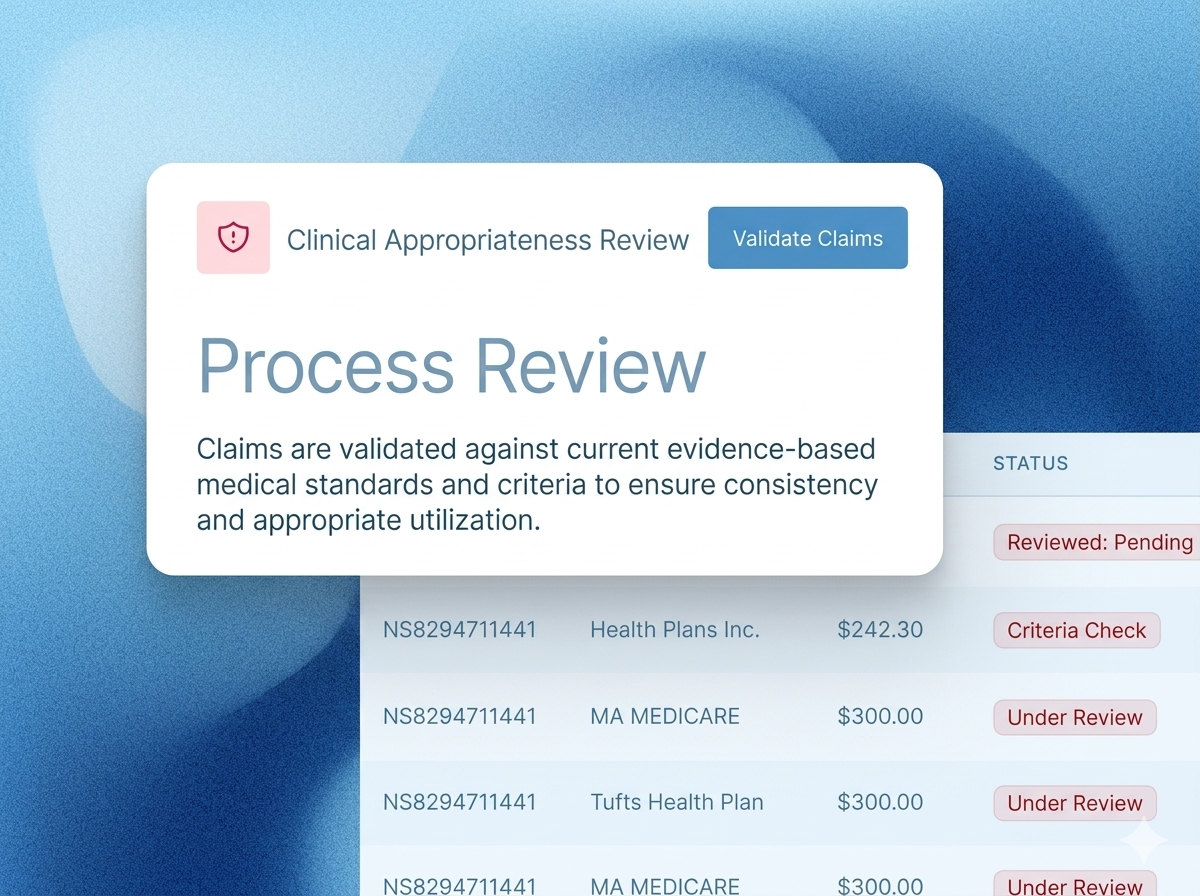
RxAI — Clinical Appropriateness

Clinical Appropriateness

Validation against evidence-based medical necessity standards.
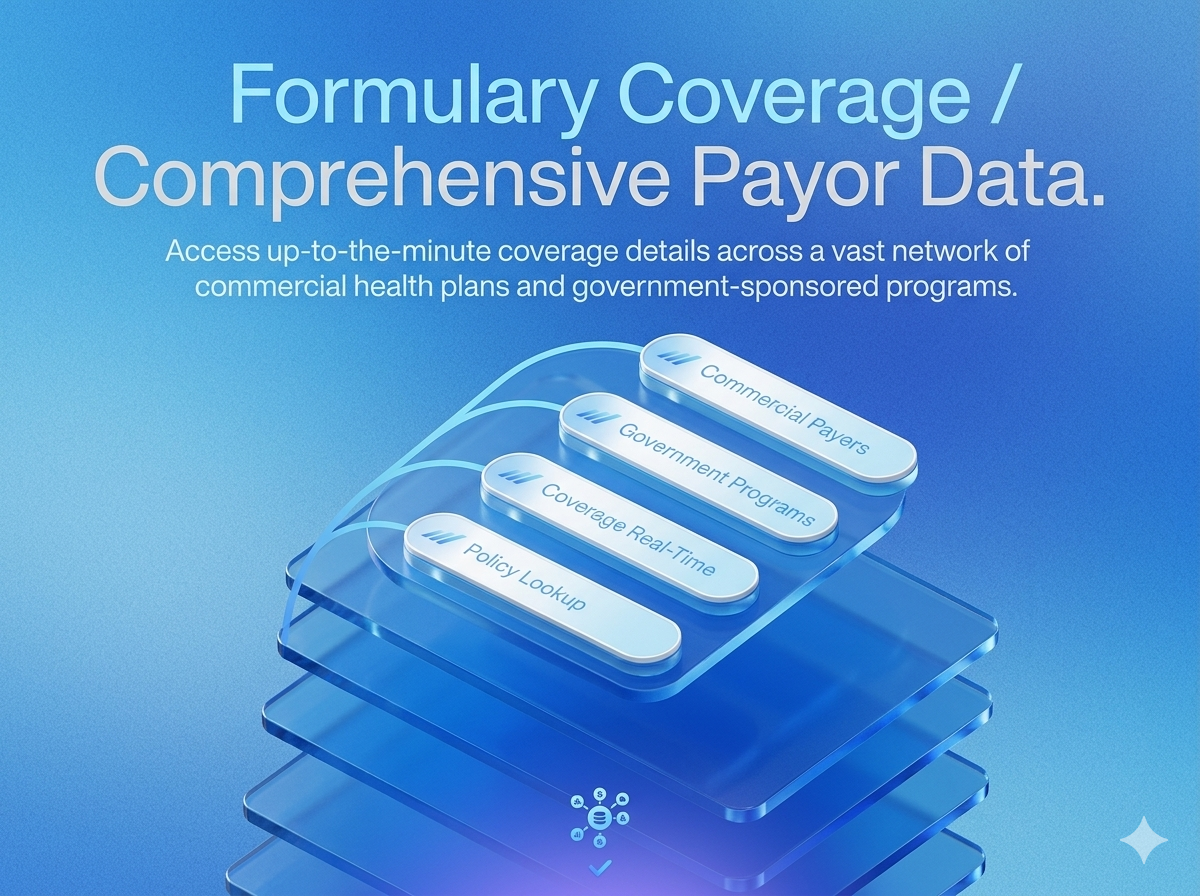
RxAI — Formulary Coverage

Formulary Coverage

Real-time lookup across commercial and government payers.

RxAI — Benefit Channel

Benefit Channel

Optimizing medical vs. pharmacy benefit pathways.
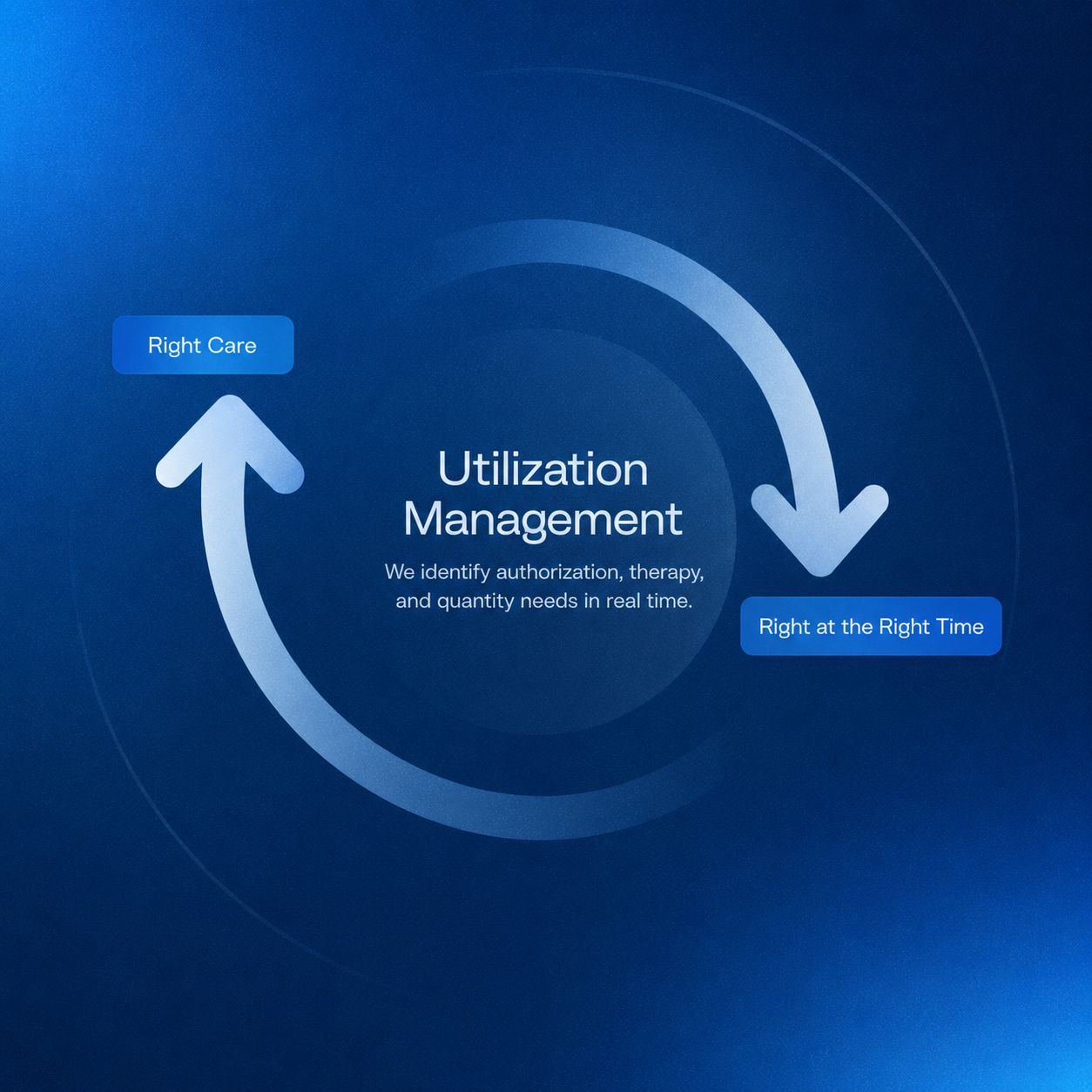
RxAI — Utilization Management

Utilization Management

Identifying PA, ST, and QL requirements instantly.
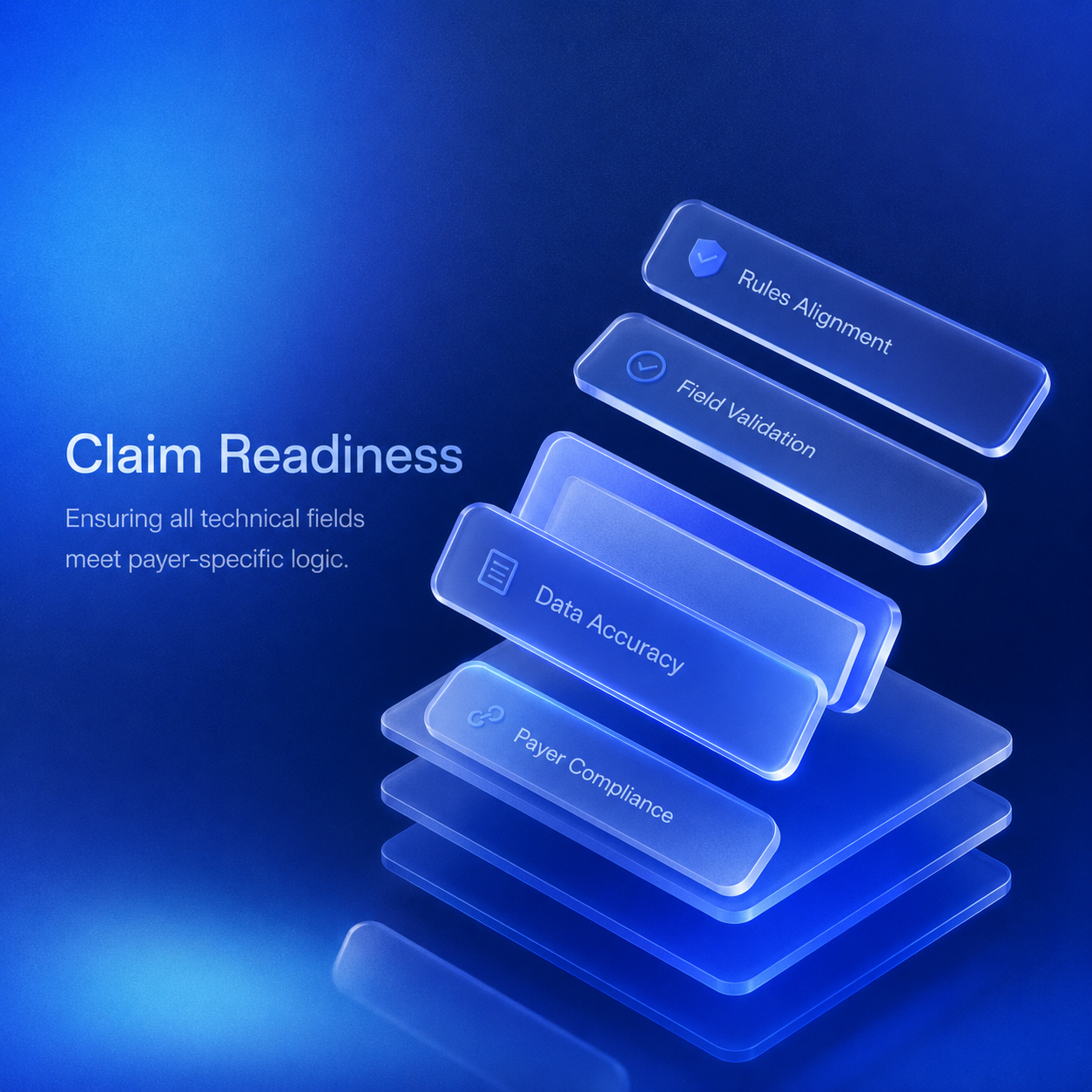
RxAI — Claim Readiness

Claim Readiness

Ensuring all technical fields meet payer-specific logic.

RxAI — Drug Intelligence

Drug Intelligence

Surfacing therapeutic alternatives for exclusion mitigation.
RxAI — Next Best Action

Next Best Action

Automated clinical task routing for the pharmacy team.

Decision Routing

Seven Executable Outcomes

Every prescription routed to one of seven outcomes. No prescription is left unresolved. Every case exits the engine with an owner and a target resolution path.

Submit

Ready for clean claim submission.

Prior Auth

Routed to prior auth with prefilled documentation and clinical justification.

Medical Benefit

Routes to medical billing channel.

Request Data

Missing documentation flagged with specific gaps.

Clinical Review

Routed to pharmacist or prescriber for clinical decision.

Manual Review

Held for human reviewer with full context.

Escalate

Edge case routed to compliance or leadership.

Before

BRIVIACT 50mg

Humana Medicare Advantage

Formulary Exclusion

Step therapy requires documented failure of two generic alternatives.

After RxAI

Levetiracetam 500mg

Covered Generic Substitution

Prescriber Approved

Formulary citation and clinical equivalence note populated automatically. Claim paid.

Worked Example

From blocked to payable in one click.

BRIVIACT, brand-name antiepileptic, written for a patient on Humana.

RxAI flags it. Humana formulary excludes BRIVIACT in this plan year. Step therapy requires documented failure of two generic alternatives.

RxAI surfaces levetiracetam as the covered generic. The substitution is routed to the prescriber with the formulary citation and the clinical equivalence note already populated.

The prescriber approves. The new claim is submitted, validated, and paid.

Built for the operators who carry the rejection cost.

Physician groups and specialty practices

High-denial verticals where prior auth volume and step therapy complexity drive rework.

MSOs and health systems

Prescription volume across multiple specialties and payer mixes.

Pharma distributors

Decisioning embedded at the dispense point to defend pharmacy customer economics.

Specialty pharmacies

High-cost therapies where a single rejection has six-figure margin impact.

System Architecture

Sits between your prescribing layer and your claims infrastructure.

RxAI ingests prescriptions from EHRs, pharmacy systems, provider portals, and direct e-prescribing feeds. It normalizes, enriches, and decides. It routes the outcome back into the workflow you already run.

No rip-and-replace. No new screens to train on. The decision shows up where the work already happens.

Integrations

SurescriptsStediFDA drug intelligenceEHR SystemsRCM Systems
Live in six to ten weeks

Implementation

Phase 1

Data integration and payer rule library tuning.

Two to four weeks.

Phase 2

Shadow decisioning against live prescription volume.

Two to three weeks.

Phase 3

Production go-live with full routing into existing workflows.

Two to three weeks.

A correctly written prescription and a payable claim are not the same thing.

Most pharmacy rework is created upstream of billing. Eligibility gaps. Formulary mismatches. Step therapy documentation that never made it into the chart.

Each one looks like a billing problem on the way out. None of them started there.

RxAI moves the decision back to where the problem actually originates.

See RxAI in your Environment

Support Center

Frequently Asked Questions About RxAI

Find answers about RxAI, pharmacy claim validation, eligibility verification, payer rules, and AI-powered pharmacy claims.

What is RxAI?

RxAI is Grelin's Claim Integrity application for pharmacy. It validates pharmacy claims across the distribution supply chain before submission, checking eligibility, coverage rules, and documentation requirements so claims are right the first time they move.

What problem does RxAI solve?

Pharmacy claims fail on eligibility gaps, coverage rules, and documentation requirements that vary by payer and program. Each failure creates rework that spreads across the pharmacy, the distributor, and the network. RxAI runs those checks before submission, where the fix is cheap.

Who is RxAI for?

Pharmacy distributors that want clean claims across their networks, pharmacies submitting claims directly, and platform companies that want validation embedded in their own products. Distribution partners can carry RxAI into their existing customer relationships.

What does RxAI check?

Patient eligibility and coverage at the time of the claim. Payer-specific and program-specific pharmacy rules. Documentation requirements tied to the product being dispensed. Data completeness before the claim leaves the pharmacy. Each check happens before submission, not after rejection.

How does RxAI deploy?

Two ways. Direct, where a pharmacy or distributor runs RxAI against its own claim flow. Or embedded, where a distribution or platform partner integrates RxAI into the system its customers already use. Both run the same validation logic.

Does RxAI replace the pharmacy's existing claim system?

No. RxAI sits in front of the existing claim flow and validates before submission. The pharmacy keeps its dispensing and billing systems. What changes is the number of claims that come back, because fewer leave wrong.

What is pharmacy claim validation?

Pharmacy claim validation is checking a prescription claim against payer eligibility, coverage rules, and documentation requirements before it is submitted. It confirms the drug is covered, the patient is eligible, and any required authorizations are in place. The claim is corrected while it is still cheap to fix, instead of returning weeks later as a rejection.

What is prior authorization?

Prior authorization is a payer requirement that a prescription be approved before it will be covered. The payer reviews clinical criteria such as diagnosis, prior treatments, and medical necessity, then approves or denies coverage. RxAI identifies when a prior authorization is required and assembles the documentation the payer needs, so the request is complete on first submission.

What is step therapy?

Step therapy is a payer rule requiring a patient to try one or more preferred, lower-cost drugs before a more expensive or non-preferred drug is covered. Claims for the non-preferred drug are denied until the required steps are documented. RxAI flags step therapy requirements up front and surfaces the covered alternative before the claim is written.

What is REMS?

REMS, or Risk Evaluation and Mitigation Strategy, is an FDA safety program required for certain high-risk drugs. It sets conditions such as prescriber certification, patient enrollment, or documented monitoring that must be met before the drug is dispensed. RxAI checks REMS requirements against the prescription so missing enrollment or documentation is caught before the claim moves.

What is formulary validation?

Formulary validation checks a prescribed drug against the patient's specific plan formulary: the list of covered drugs, their tiers, exclusions, and preferred alternatives. It confirms whether the drug is covered under that plan and at what tier. RxAI runs this check in real time, so a non-covered drug is caught and a covered alternative surfaced before submission.

Still have questions?

We're here to help you navigate the complexities of revenue cycle intelligence.

Contact Support