
Build on the platform that sees the whole claim.
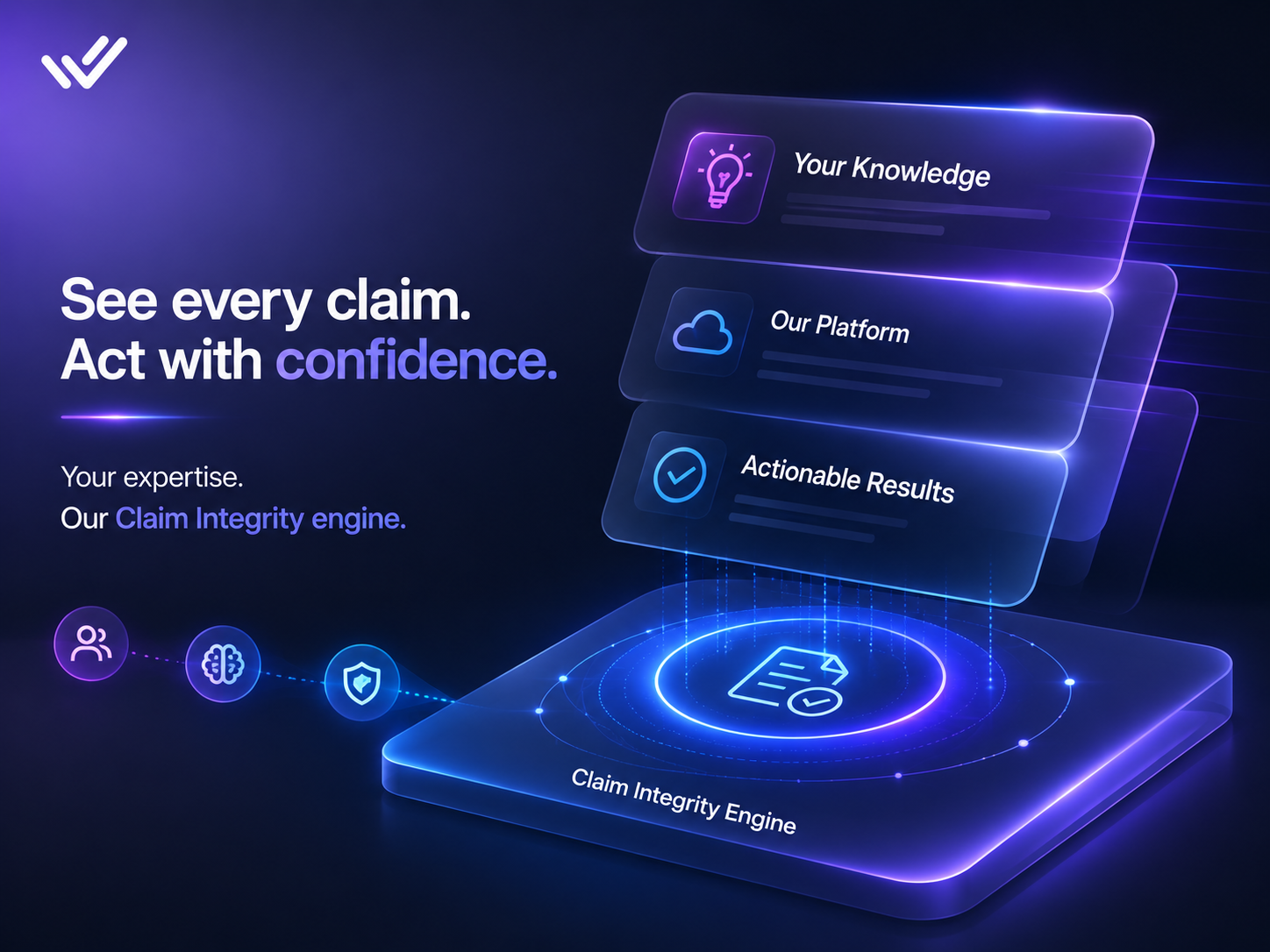
You know things about claims that no software currently knows. Grelin turns what you know into working software that runs on the Claim Integrity engine. You bring the expertise. The platform does the rest.
The ecosystem
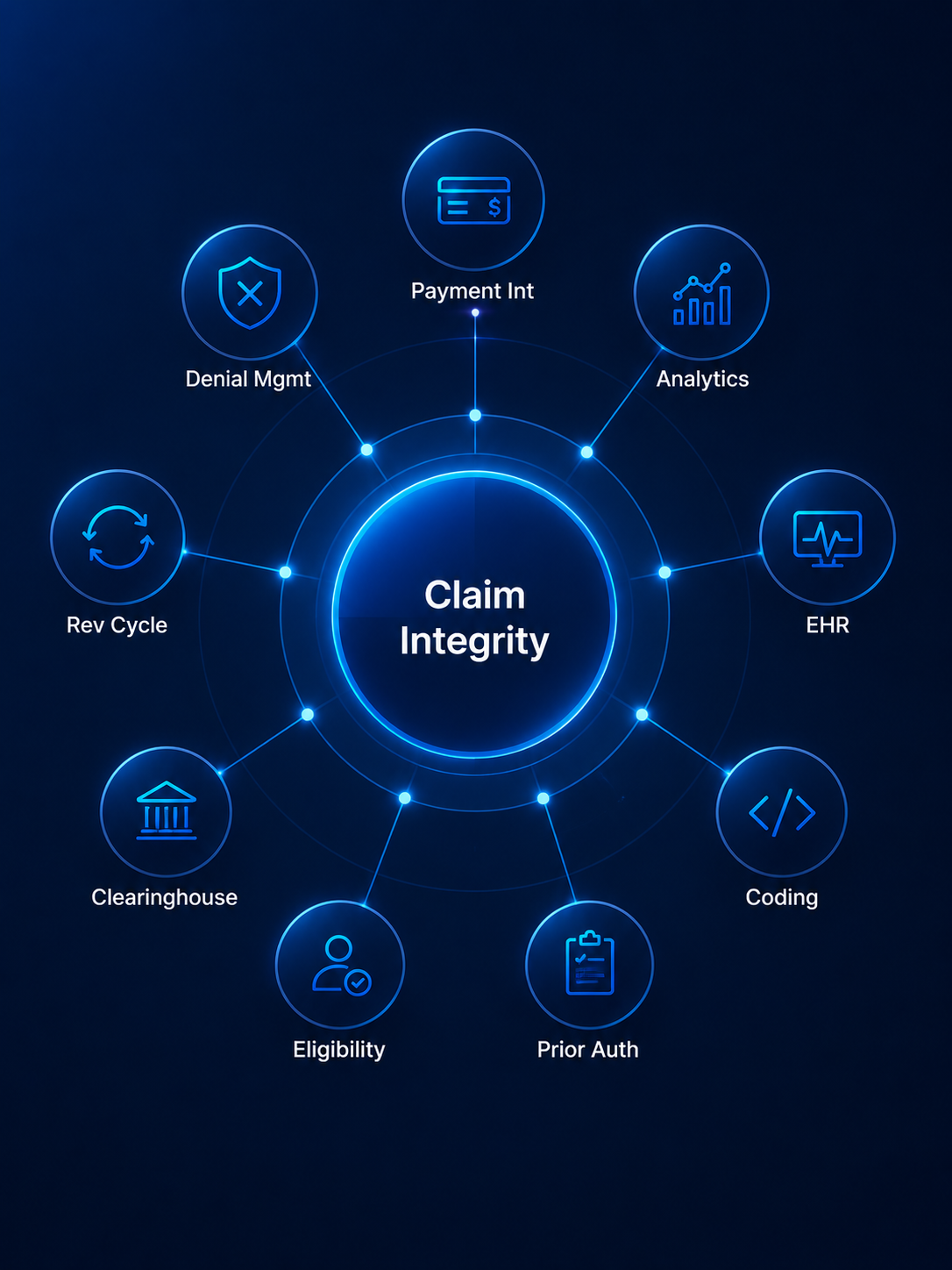
Nine markets are becoming one.
Most people see healthcare revenue as a stack of separate tools. The EHR. Coding. Prior authorization. Eligibility. The clearinghouse. Revenue cycle. Denial management. Payment integrity. Analytics.
They are not separate. They are converging on a single question. Is this claim correct before it is ever submitted.
That question is Claim Integrity. Every tool in the stack touches a different part of the same claim at a different moment. None of them sees the whole thing.
A coding tool sees coding. A clearinghouse sees transactions. An EHR sees documentation.
Grelin sees the entire revenue journey. That is the seat that becomes valuable, because it is the only one that can assemble a view nobody else can.
The partner platform opens that seat to you.
Playbooks
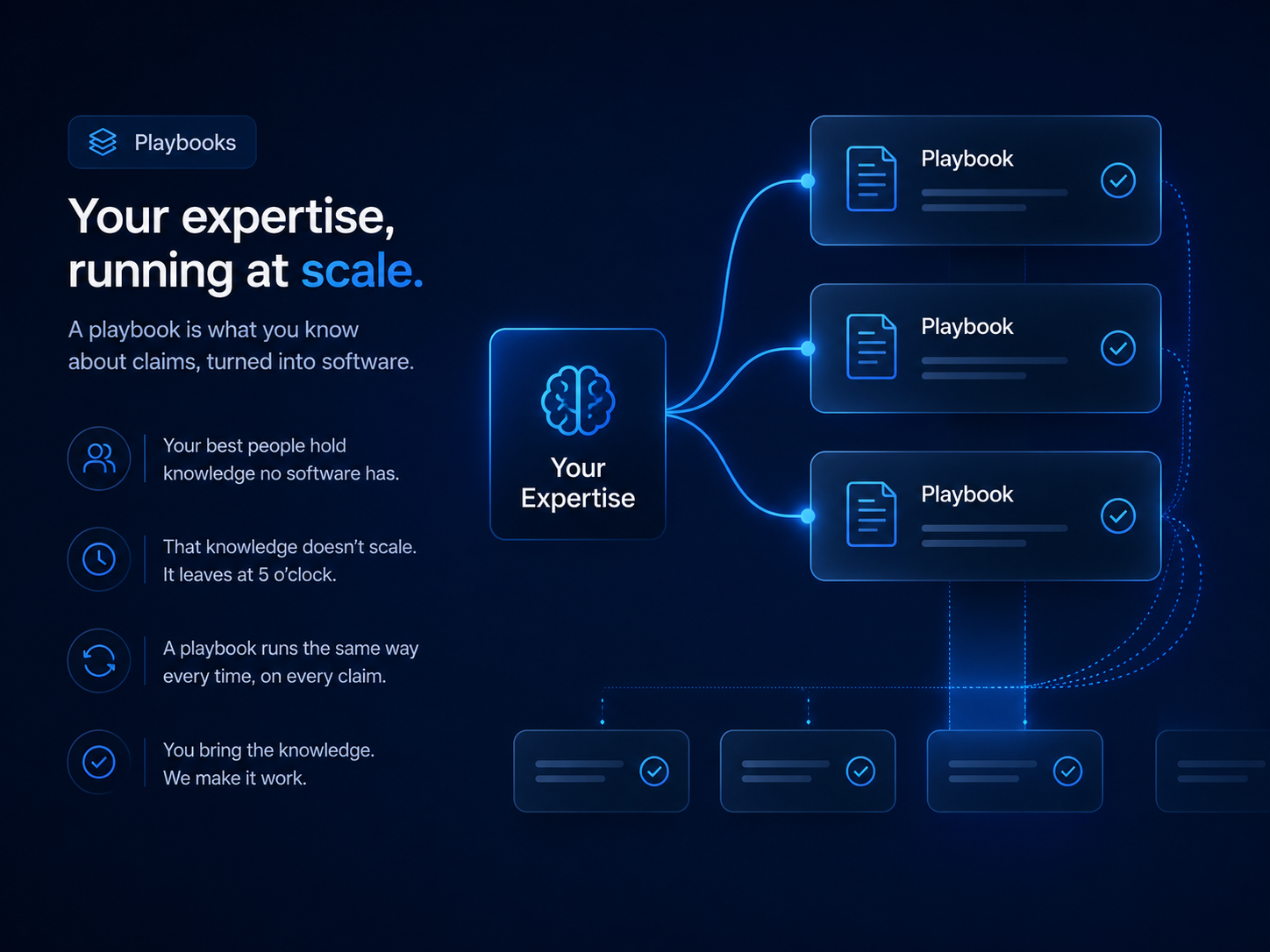
Your expertise, running at scale.
A playbook is what you know about claims, turned into software.
Today that knowledge lives in your best people. The senior auditor who knows where the money leaks. The specialist who knows the payer logic for their procedures cold. The advisor who has seen the same error a thousand times.
That knowledge does not scale. It walks out the door at five o'clock and it cannot be in two places at once.
A playbook fixes that. It runs the same way every time, against every claim, without getting tired and without forgetting a rule.
You hold knowledge that no software currently has. A playbook is how you put it to work.
From plain language to live software
You describe it. The AI builds it. The platform runs it.
You do not need to write code. You do not need an engineering team. You need to know your domain.
Describe your method in plain language.
What to look for. Where the errors hide. What a good finding requires. You explain it the way you would explain it to a sharp new hire.
The AI generates the code.
Your method becomes a working playbook. The logic, the data, the scoring, the structure of every finding. The build that used to take a year and a custom engineering project now happens inside a normal working cycle.
The playbook goes live on the platform.
It plugs into the Claim Integrity engine, runs against real claim flow, and starts producing results. The plumbing is already built. The data is already normalized. You are building on a foundation, not from scratch.
The hard part is already done. The part only you can do is the part you already know.
The substrate
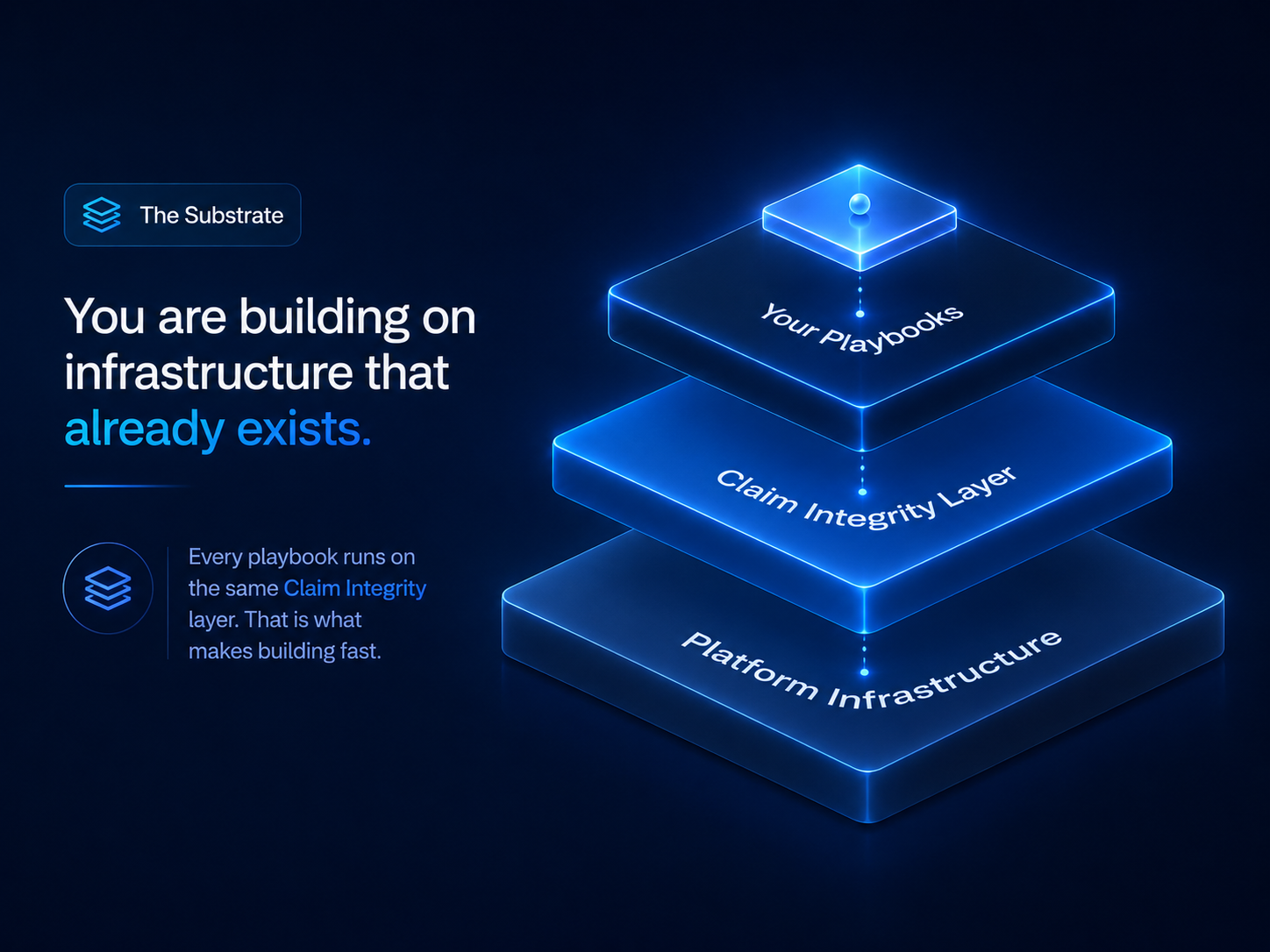
You are building on infrastructure that already exists.
Every playbook runs on the same Claim Integrity layer. That is what makes building fast.
One claims data model.
Claims, eligibility, remittance, and clinical context, all mapped into one consistent shape. You never touch the chaos of raw payer formats.
Connections already built.
The integrations into clearinghouses, EHRs, and payer systems are built once and shared by everyone. You do not rebuild plumbing.
An engine that learns.
Every claim the platform sees teaches it what breaks and why. Your playbook gets the benefit of everything the platform has already learned.
This is why a methodology that would have taken years to productize can be live and working in weeks.
The partner ecosystem
If you depend on claim integrity, you can build here.
The ecosystem is wide on purpose. Anyone who works with claims holds knowledge worth encoding.
You do not have to fit a category. If you understand a corner of the claim better than the software does, there is a playbook in it.
Providers and MSOs.
How care actually gets documented and billed in your specialty.
Payers and TPAs.
The adjudication logic that decides what gets paid.
Plan sponsors.
Self funded employers who fund the claims and want to audit what they fund.
Pharmacy networks.
PSAOs, long term care, and specialty pharmacy, each with logic that does not transfer to anyone else.
Specialty verticals.
Wound care, pain management, DME, and behavioral health. Logic a general tool guesses at and you know cold.
RCM firms and advisors.
Consultants, auditors, brokers, and integrators who already sit between many providers and many payers.
The compounding effect
Every playbook makes the platform smarter.
This is the part that separates a platform from a tool.
More claim flow makes the engine smarter. A smarter engine produces better playbooks. Better playbooks attract more builders. More builders bring more claim flow.
Then it turns again, faster.
When you build here, you are not building on something static. You are building on something that improves underneath you while you sleep, fed by every other expert on the platform.
The economics
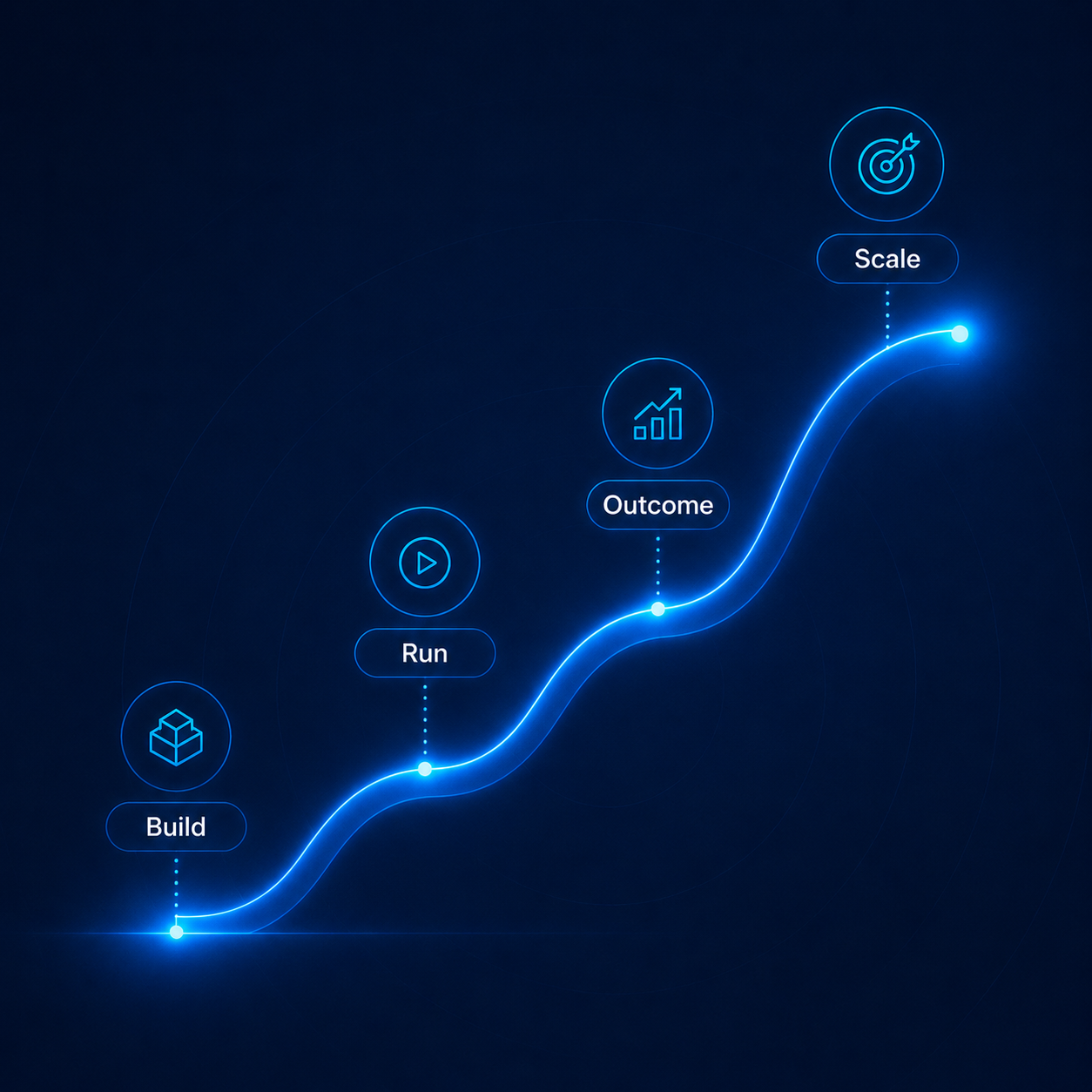
You sell what you build. The platform runs it.
You own your methodology. You own your client relationships. You bring the deal.
The platform earns on the runtime. You earn on the value you create.
There are several ways partners get paid. A one time build credit when a playbook is created. Recurring revenue as your playbook runs. Outcome based pricing tied to dollars recovered or prevented, which is how the audit world already pays. And revenue share as you build at volume.
The right structure depends on your business and your client mix. We size it together during onboarding so the model fits how you actually work.
This is for people who already know where the money goes.
You are a good fit if you hold deep, specific knowledge about a part of the claim. If you have a methodology that works and have wished it could run everywhere at once. If you sit close to providers, payers, or plans and they trust your judgment.
See it run on your claims.
Bring us a sample of your claim flow and we will show you what the platform finds. Whether you submit claims, pay them, fund them, or audit them.